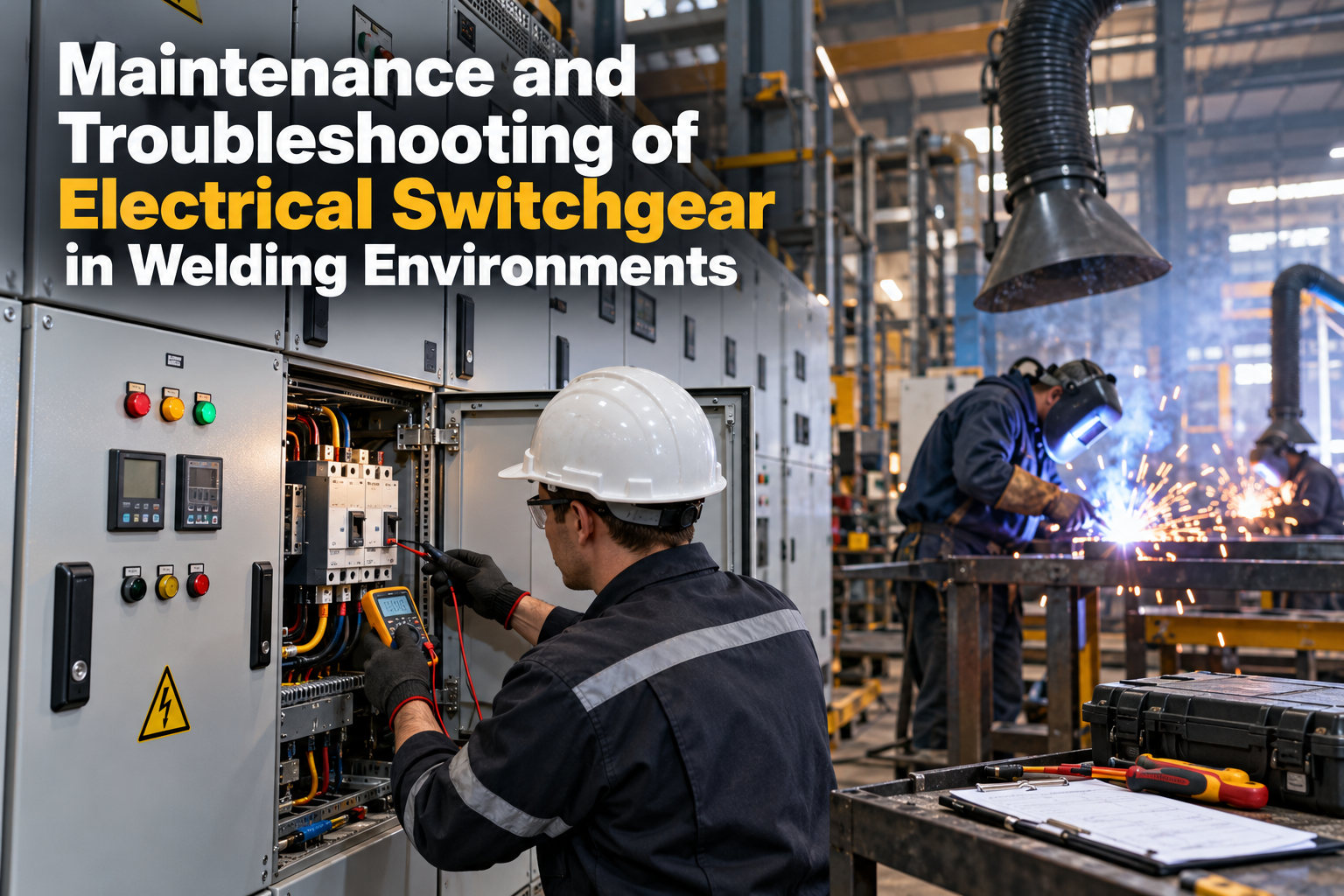
Electrical switchgear plays a critical role in maintaining safe and reliable power distribution in welding environments. Welding operations require substantial electrical power, and frequent load changes can put additional stress on electrical equipment. Without proper maintenance, switchgear components may overheat, experience insulation deterioration, trip unexpectedly, and fail prematurely.
Welding workshops also present challenging operating conditions. Metal dust, welding fumes, heat, vibration, and moisture can affect electrical connections and protective devices. These conditions make regular inspection and timely troubleshooting essential for preventing equipment damage and operational downtime.
Understanding how to maintain electrical switchgear and identify common problems helps facility managers and maintenance teams improve equipment reliability, reduce repair costs, and maintain safer working conditions.
Understanding Electrical Switchgear in Welding Environments
Electrical switchgear refers to equipment that controls, protects, and isolates electrical circuits. It typically includes circuit breakers, disconnect switches, protective relays, contactors, fuses, and associated control components.
In welding facilities, switchgear distributes electricity to welding machines, ventilation systems, material-handling equipment, and other industrial machinery.
Its main functions include:
- Electrical protection: Detecting and interrupting fault conditions such as short circuits and excessive current.
- Power distribution: Supplying electricity to multiple welding stations and supporting equipment.
- Equipment isolation: Safely disconnecting electrical circuits for inspection and maintenance.
- Operational control: Supporting reliable switching and coordination between electrical loads.
Welding environments create additional challenges because equipment frequently operates under changing electrical loads. Maintaining switchgear in these conditions requires attention to both electrical performance and environmental exposure.
Common Challenges Affecting Switchgear in Welding Workshops
Understanding the conditions that cause switchgear problems is the first step toward developing an effective maintenance strategy.
1. Excessive Dust and Metal Particles
Grinding, cutting, and welding processes generate fine particles that can accumulate around electrical equipment.
When conductive metal dust enters inadequately protected enclosures, it can contribute to insulation problems, tracking, and electrical faults. Dust accumulation may also restrict ventilation and increase operating temperatures.
2. Overheating and High Electrical Loads
Welding equipment can draw substantial current, particularly during demanding operating cycles.
Overloaded circuits, loose connections, poor ventilation, and deteriorating contacts can raise switchgear temperatures. Persistent overheating can damage insulation, weaken components, and increase the likelihood of electrical failure.
3. Moisture and Corrosion
Humidity, condensation, cooling-water leaks, and exposure to industrial chemicals can accelerate corrosion inside electrical enclosures.
Corroded terminals and contacts may develop higher electrical resistance, leading to unreliable operation and localized heating.
4. Vibration and Mechanical Stress
Industrial workshops often contain heavy machinery that generates continuous vibration.
Over time, vibration can contribute to mechanical wear or loosen improperly secured connections. These conditions may affect circuit breakers, contactors, and other switching mechanisms.
5. Frequent Switching Operations
Some welding installations involve repeated equipment startup and shutdown.
Frequent switching can gradually wear electrical contacts and mechanical components, especially when devices are operated near their rated limits.
Recognizing these challenges helps maintenance personnel identify which components need closer monitoring.
Essential Maintenance Practices for Electrical Switchgear
A preventive maintenance program should combine routine inspections, equipment cleaning, electrical testing, and proper documentation.
1. Perform Regular Visual Inspections
Visual inspection is one of the simplest ways to identify developing switchgear problems.
Maintenance personnel should look for:
- Discoloration or heat damage around accessible components.
- Cracked insulation or damaged cable coverings.
- Corrosion on enclosure surfaces and accessible terminals.
- Unusual sounds or odors during normal operation.
- Damaged enclosure seals and ventilation openings.
- Warning indicators or abnormal breaker conditions.
Exterior inspections can often identify problems before equipment failure occurs. Internal inspections must be performed only by qualified personnel after appropriate electrical isolation and verification.
Treat any signs of burning, smoke, or significant overheating as a serious warning that requires professional assessment.
2. Keep Switchgear Clean and Protected
Cleanliness is particularly important in welding environments where metal particles and airborne contaminants are common.
Keep enclosure exteriors, surrounding areas, and approved ventilation openings clear of dust and debris.
For internal cleaning, qualified maintenance personnel should follow the manufacturer’s instructions after establishing electrically safe working conditions.
Avoid spraying water or applying unsuitable cleaning chemicals to electrical components. Do not use compressed air indiscriminately, as it can drive conductive particles deeper into equipment.
If contamination persists, consider improving workshop ventilation, relocating sensitive equipment, or selecting enclosures with appropriate environmental protection ratings.
3. Inspect Electrical Connections
Thermal cycling, vibration, corrosion, and mechanical wear can degrade electrical connections.
Loose or damaged connections can increase resistance, producing localized heat and potentially damaging adjacent components.
During scheduled maintenance, qualified electricians should inspect accessible terminals, busbar connections, and cable terminations.
Follow the manufacturer’s specified torque requirements and maintenance procedures for any tightening. Over-tightening can damage terminals, while under-tightening can leave connections unreliable.
Connections showing significant heat damage or corrosion may require replacement rather than adjustment.
4. Monitor Temperature and Overheating
Temperature monitoring helps detect electrical problems that routine inspections may miss.
Infrared thermography can identify abnormal temperature differences at connections, breakers, and other electrical components.
A qualified technician can compare equipment temperatures under representative operating loads to identify potential hotspots.
However, thermal images require proper interpretation. Temperature differences may result from load variations, surface characteristics, or surrounding conditions.
Investigate any suspected overheating rather than immediately attributing it to a loose connection.
5. Test Circuit Breakers and Protective Devices
Circuit breakers and protective relays are essential for isolating electrical faults.
Depending on equipment type and manufacturer guidance, maintenance testing may include:
- Mechanical operation checks.
- Insulation resistance testing.
- Contact resistance measurements.
- Verification of protective settings.
- Functional testing of trip mechanisms.
- Inspection of control and auxiliary circuits.
Qualified electrical testing personnel should complete specialized tests using appropriate procedures and calibrated instruments.
Never change protective settings simply to prevent nuisance tripping. Incorrect settings can leave equipment inadequately protected.
6. Check Insulation Condition
Heat, moisture, contamination, and aging can deteriorate electrical insulation.
Damaged insulation increases the risk of leakage current, electrical faults, and equipment failure.
Qualified technicians may perform insulation resistance testing during planned shutdowns where the test is suitable for the installed equipment.
Sensitive electronic components must be protected or disconnected when required by the manufacturer before applying test voltages.
Record testing results and compare them with previous measurements, manufacturer requirements, and applicable maintenance standards.
Troubleshooting Common Electrical Switchgear Problems
Even with regular maintenance, electrical switchgear may develop faults that interrupt welding operations.
A systematic troubleshooting process helps identify underlying causes instead of repeatedly addressing symptoms.
Problem 1: Circuit Breakers Trip Frequently
Frequent breaker tripping is common in workshops running multiple welding machines.
Possible causes:
- Excessive simultaneous electrical loads.
- Short circuits or ground faults.
- Incorrect protective-device selection or settings.
- Damaged wiring or insulation.
- Defective circuit breakers.
Recommended troubleshooting:
Document when the tripping occurs and which welding equipment is operating. A qualified electrician should assess circuit loading, fault indications, protective coordination, and equipment condition.
Do not repeatedly reset a breaker without investigating the cause. Never bypass or increase protective settings without an approved engineering assessment.
Problem 2: Switchgear Components Overheat
Excessive heat may indicate increased electrical resistance, insufficient ventilation, overloading, or deteriorating components.
Possible causes:
- Loose or corroded connections.
- Continuous operation beyond equipment ratings.
- Restricted airflow.
- Damaged contacts.
- Unbalanced electrical loads.
Recommended troubleshooting:
Arrange a qualified electrical inspection and appropriate temperature assessment. Depending on the findings, corrective work may involve replacing damaged connections, improving ventilation, or addressing excessive loads.
Isolate and assess equipment with severe overheating symptoms before returning it to service.
Problem 3: Contactors Fail to Operate Properly
Contactors control electrical circuits and may wear out after repeated switching.
Possible causes:
- Worn or damaged contacts.
- Incorrect control voltage.
- Defective operating coils.
- Mechanical obstruction.
- Problems in the control circuit.
Recommended troubleshooting:
Qualified personnel should check the control circuit, inspect the contactor mechanism, and verify relevant electrical measurements.
Replace defective components with compatible parts that meet the equipment manufacturer’s specifications.
Problem 4: Unexpected Power Interruptions
Intermittent electrical supply can disrupt welding performance and reduce productivity.
Possible causes:
- Intermittent electrical connections.
- Protective-device operation.
- Control circuit failures.
- Supply voltage disturbances.
- Deteriorating switching components.
Recommended troubleshooting:
Review event records, fault indicators, operating conditions, and available power-quality measurements.
A qualified technician should determine whether the interruption originates from the incoming electrical supply, distribution switchgear, or connected equipment.
Replacing components without confirming the cause may allow the problem to continue.
Problem 5: Corrosion and Insulation Damage
Corrosion and insulation deterioration can gradually reduce electrical equipment reliability.
Possible causes:
- Moisture entering enclosures.
- Condensation caused by temperature changes.
- Exposure to corrosive fumes.
- Damaged cable insulation.
- Inadequate environmental protection.
Recommended troubleshooting:
Identify and eliminate the source of contamination or moisture. Evaluate damaged insulation, corroded terminals, and compromised electrical components for replacement.
Equipment exposed to significant moisture must be properly dried, inspected, and tested before being returned to service.
Recommended Switchgear Maintenance Schedule
Maintenance intervals should reflect equipment condition, operating severity, manufacturer recommendations, and the facility’s electrical maintenance program.
| Maintenance activity | Suggested planning interval |
| Exterior condition and warning-indicator checks | Daily or weekly |
| Inspection of enclosure seals and ventilation | Monthly |
| Review of trip events and operating records | Monthly |
| Thermographic inspection | Based on risk and operating history |
| Detailed electrical and mechanical inspection | During scheduled shutdowns |
| Protective-device and insulation testing | According to equipment requirements and maintenance standards |
These intervals are general planning guidance, not mandatory testing frequencies. Welding facilities with high contamination levels, heavy equipment utilization, or repeated faults may require more frequent inspections.
Maintenance records should document observed conditions, test results, repairs, replaced components, and any recurring problems.
Choosing Replacement Switchgear Components
Selecting appropriate replacement components is an important part of maintaining electrical reliability.
Using incorrectly rated circuit breakers, contactors, relays, or switches may compromise equipment performance and protection.
When purchasing replacement components from an electrical parts store, maintenance teams should verify compatibility with the existing system.
Important selection factors include:
- Rated operating voltage and current.
- Short-circuit interrupting or withstand ratings.
- Mechanical and electrical compatibility.
- Environmental protection requirements.
- Manufacturer specifications and approvals.
- Applicable electrical standards.
Prioritize original equipment manufacturer parts or properly approved alternatives.
Do not select a replacement component based solely on physical size or purchase price. Its electrical characteristics and intended application must also match the installation requirements.
Safety Precautions During Switchgear Maintenance
Electrical switchgear maintenance involves potentially serious electrical hazards, particularly where high fault currents are available.
Before internal inspection, servicing, or component replacement, authorized personnel must follow the applicable hazardous-energy control procedures.
Essential precautions include:
- Identify all electrical energy sources, including possible backfeeds.
- Properly shut down and isolate the equipment.
- Apply the required lockout/tagout controls.
- Control stored energy and verify the absence of voltage using approved procedures.
- Use suitable protective equipment, tools, and test instruments.
- Restore equipment only after completing required checks and confirming safe operating conditions.
Welding facilities should also maintain appropriate grounding and bonding arrangements and prevent welding current from passing through unintended electrical or structural paths.
Personnel without the necessary electrical qualifications should report suspected faults rather than attempting internal switchgear repairs.
Improving Long-Term Switchgear Reliability
Long-term reliability depends on more than responding to faults after they occur.
Facilities should establish a structured maintenance program that considers equipment age, operating history, environmental exposure, and the consequences of unexpected failure.
Useful improvements include installing suitable protective enclosures, controlling welding dust, reviewing electrical loading, monitoring recurring faults, and maintaining accurate service records.
Employee training is equally important. Welding operators should recognize overheating, damaged cables, unusual equipment behavior, and repeated protective-device operation.
Early reporting lets maintenance teams investigate problems before they become more serious failures.
Conclusion
Maintaining electrical switchgear in welding environments requires consistent inspections, contamination control, electrical testing, and timely troubleshooting. Neglecting maintenance can accelerate equipment deterioration when dust, heat, moisture, vibration, and changing electrical loads are present.
By identifying common faults, using properly rated replacement components, and following established electrical safety procedures, welding facilities can reduce unexpected interruptions and improve equipment reliability.
A well-planned preventive maintenance program supports safer operations, extends equipment service life, and helps keep welding processes running efficiently.