Workplace safety is a fundamental concern in industrial environments where employees may work around heavy machinery, hazardous materials, high temperatures, electrical systems, moving vehicles, and other potential sources of injury. Manufacturing plants, warehouses, construction facilities, processing units, power plants, and logistics centers require effective safety systems to protect employees, visitors, equipment, and property. While traditional safety measures such as protective clothing, warning signs, training programs, emergency procedures, and regular inspections remain essential, modern surveillance equipment can provide an additional layer of protection.
Surveillance technology allows organizations to observe industrial environments, identify unsafe conditions, respond quickly to emergencies, and investigate incidents. Modern systems can include CCTV cameras, thermal cameras, access-control systems, motion sensors, video analytics, alarm systems, wearable monitoring devices, and specialized cameras designed for difficult environments. When these technologies are integrated with workplace safety procedures, organizations can improve their ability to prevent accidents rather than simply responding after an accident has occurred.
One technology sometimes discussed in workplace surveillance is a hidden camera. Hidden cameras can have legitimate applications in specific circumstances, such as investigating suspected theft, unauthorized access, deliberate equipment damage, or serious security concerns. However, their use in workplaces raises significant privacy and ethical considerations. Employers should use covert surveillance only when legally permitted, genuinely necessary, proportionate to the security concern, and consistent with applicable workplace and privacy requirements. Ordinary safety monitoring is generally better served by visible cameras accompanied by appropriate notice and clearly defined policies.
Importance of Surveillance in Industrial Safety
Industrial workplaces can change rapidly. A production line may operate continuously, forklifts may move through warehouses, workers may enter restricted areas, and hazardous processes may require constant monitoring. Supervisors cannot physically observe every location at every moment. Surveillance equipment can help fill this gap.
A properly designed surveillance system can provide continuous visual information about important areas of a facility. Cameras positioned near machinery, loading zones, entrances, storage areas, emergency exits, and other high-risk locations can help safety personnel recognize hazards. For example, a camera may reveal that a worker has entered an area without required protective equipment or that materials have been placed too close to an emergency exit.
Surveillance can also contribute to faster emergency response. If smoke, an accident, a chemical leak, equipment failure, or unauthorized entry occurs, security personnel can potentially identify the event and notify the appropriate response team. Recorded footage can subsequently help investigators determine what happened and identify improvements that may prevent a similar incident.
However, surveillance should not replace established safety practices. Cameras cannot compensate for inadequate employee training, poorly maintained machinery, insufficient protective equipment, or weak safety procedures. Instead, surveillance should operate as one component of a broader occupational safety system.
CCTV Cameras
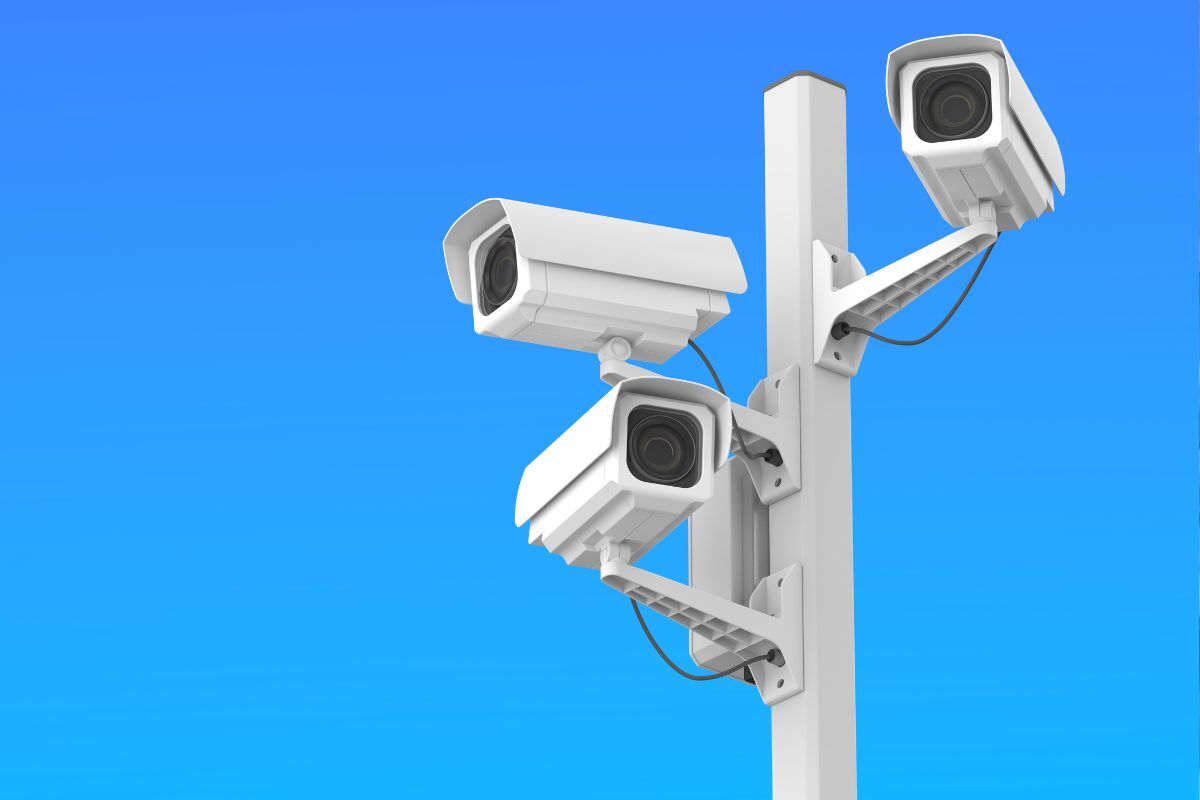
Closed-circuit television, commonly known as CCTV, is among the most widely used forms of workplace surveillance. CCTV systems use cameras to capture video that can be viewed live, recorded for later examination, or both.
In industrial environments, cameras can be installed in locations where safety risks are particularly significant. Examples include production floors, warehouse aisles, loading docks, entrances and exits, parking areas, equipment rooms, and restricted zones.
Visible CCTV cameras can have a preventive function. Employees and visitors who know that designated areas are monitored may be more likely to follow established safety procedures. Cameras can also help supervisors identify recurring unsafe practices and provide evidence for safety training.
Modern CCTV systems can provide high-resolution images, low-light recording, wide-angle coverage, remote monitoring, and other capabilities. Network-connected cameras can allow authorized personnel to monitor multiple areas from a central control room.
The placement of cameras is particularly important. Poorly positioned cameras may create blind spots or capture irrelevant areas while failing to monitor important hazards. A professional risk assessment can help organizations determine where surveillance provides the greatest safety benefit.
Thermal Imaging Cameras
Thermal cameras detect heat rather than relying exclusively on visible light. They can be useful in industrial environments because unusual temperature patterns may indicate potential problems.
For example, excessive heat around electrical equipment can sometimes indicate an abnormal condition requiring inspection. Thermal imaging can also assist with monitoring industrial processes, machinery, storage facilities, and areas where temperature changes are important.
Another advantage is that thermal cameras can operate in conditions where conventional cameras may have difficulty producing useful images. Their capabilities can therefore complement traditional CCTV.
Thermal imaging should nevertheless be interpreted appropriately. A thermal camera can identify temperature differences, but it does not automatically determine the cause of those differences. Qualified personnel may need to inspect equipment and determine whether corrective action is necessary.
Cameras With Video Analytics
Modern surveillance systems increasingly incorporate software that can analyze video automatically. Instead of requiring security personnel to watch numerous screens continuously, video analytics can identify particular events or patterns.
Examples include detecting movement in restricted areas, identifying objects left in designated zones, recognizing when someone crosses a virtual boundary, or generating alerts when unusual activity occurs.
In industrial safety applications, analytics can potentially help identify situations such as unauthorized access to hazardous areas or people entering designated machinery zones.
Artificial intelligence and machine-learning technologies can also be incorporated into some surveillance systems. Depending on the system, automated analysis may assist with identifying safety-related events. However, automated detection is not perfect. False alarms can occur, and systems may fail to recognize unusual circumstances.
Consequently, organizations should treat automated alerts as tools for supporting human decision-making rather than assuming that technology can independently guarantee safety.
Access-Control and Surveillance Integration
Workplace safety is closely connected to controlling who can enter particular areas. Access-control systems can use identification cards, biometric systems, PINs, mobile credentials, or other technologies to restrict access.
When access control is integrated with video surveillance, organizations can obtain a more complete picture of security events. For example, an access-control system may record that an authorized credential was used to enter a restricted room while a nearby camera records activity in the same area.
This integration can help organizations investigate unauthorized entry, equipment theft, safety violations, and other incidents. Restricted areas containing hazardous chemicals, high-voltage equipment, or dangerous machinery can receive additional protection.
Access control should be designed carefully, particularly when biometric information is involved. Organizations should consider applicable privacy requirements, data protection responsibilities, retention periods, and employee rights.
Motion Sensors and Alarm Systems
Surveillance does not necessarily have to depend entirely on cameras. Motion detectors, door sensors, emergency alarms, smoke detectors, gas detectors, and other monitoring devices can provide valuable information.
Motion sensors can identify movement in areas that are expected to remain unoccupied. Door sensors can indicate when restricted doors are opened. Alarm systems can notify responsible personnel when dangerous conditions are detected.
These technologies can complement CCTV. A sensor may first detect an unusual event, while a nearby camera can provide visual information about what caused the alert.
For example, if a motion sensor detects activity in a restricted equipment room outside normal operating hours, security personnel may review camera footage to determine whether the movement resulted from an authorized employee, an intruder, or another event.
Hidden Cameras and Workplace Security
A hidden camera is a surveillance device designed to be concealed from ordinary view. Hidden cameras may be used in certain security investigations, but they require considerably more caution than conventional visible CCTV.
In an industrial workplace, covert surveillance might be considered when an organization is investigating a serious and specific security problem, such as suspected theft or deliberate damage to critical equipment. Even in such circumstances, employers should determine whether covert surveillance is legally permissible and whether less intrusive alternatives would achieve the same purpose.
Hidden cameras should never be treated as a general justification for secretly monitoring employees. Areas where workers reasonably expect privacy, such as bathrooms, changing rooms, medical areas, and similar spaces, require particularly strong protection and may be legally off-limits to surveillance.
Organizations should also consider whether workers and visitors must be informed about surveillance. Requirements vary between jurisdictions and circumstances, so employers should obtain appropriate legal and privacy guidance before implementing covert monitoring.
The principle of proportionality is important. If visible CCTV, access records, physical security, inventory controls, or other measures can address a problem effectively, secretly recording people may be unnecessarily intrusive.
Therefore, hidden cameras should be regarded as a narrowly controlled security tool rather than a routine workplace-safety technology.
Wearable Safety Devices
Wearable technology is another growing area of industrial safety. Workers may use smart badges, location trackers, connected protective equipment, or wearable sensors to communicate information about their working environment.
Some devices can monitor environmental conditions or detect falls and sudden impacts. Others can help locate employees during emergencies.
For example, location-aware technology may help emergency teams determine where workers are located during a facility evacuation. Wearable devices may also support lone-worker safety by providing alerts if an employee falls or fails to respond to a scheduled check-in.
However, wearable monitoring creates privacy concerns because it can collect information about employee movements. Employers should clearly define what information is collected, why it is collected, who can access it, and how long it will be retained.
Surveillance in Hazardous Areas
Some industrial environments are too dangerous for continuous human observation. Cameras can provide remote visibility into locations involving heat, chemicals, heavy machinery, radiation, or other hazards.
Remote cameras can reduce the need for workers to enter dangerous areas simply to conduct routine visual inspections. In certain applications, specialized cameras may operate in environments involving dust, moisture, extreme temperatures, or other challenging conditions.
Surveillance can also assist during emergencies. If a hazardous area becomes unsafe, remote visual information may help responsible personnel understand conditions before deciding whether an employee should enter the area.
This illustrates an important safety advantage of surveillance technology: in some circumstances, information can be obtained without exposing another person unnecessarily to danger.
Preventing Accidents Through Video Monitoring
One of the greatest potential benefits of surveillance is the identification of unsafe conditions before they produce an accident.
Suppose recorded footage repeatedly shows employees walking through a vehicle pathway because the designated pedestrian route is inconvenient. Management could use this information to reconsider the facility’s layout.
Similarly, surveillance might reveal repeated congestion around loading docks, unsafe stacking of materials, inadequate separation between forklifts and pedestrians, or frequent obstruction of emergency exits.
The purpose should not simply be to punish individual employees. Organizations can use surveillance findings to identify underlying problems in workplace design, training, supervision, and safety procedures.
A strong safety culture focuses on preventing incidents and correcting systemic hazards rather than relying exclusively on disciplinary responses.
Incident Investigation and Evidence
When an accident occurs, surveillance footage can provide important evidence about the sequence of events. Investigators may use recordings to determine where employees were located, how equipment was operating, or what happened immediately before an incident.
This information can be useful when conducting root-cause analysis. Instead of relying entirely on memory or eyewitness accounts, investigators may have objective visual evidence to consider.
Surveillance recordings can also help identify whether safety procedures were followed. However, footage should be interpreted carefully. A short video segment may not provide sufficient context to understand why an employee behaved in a particular way.
Organizations should therefore combine surveillance evidence with interviews, maintenance records, training records, risk assessments, and other relevant information.
Conclusion
Surveillance equipment can make a valuable contribution to safety in industrial settings when it is implemented as part of a comprehensive workplace safety strategy. CCTV cameras, thermal imaging systems, video analytics, access-control systems, motion sensors, alarms, and wearable devices can help organizations observe hazardous areas, identify unsafe conditions, respond to emergencies, and investigate incidents.
A hidden camera may have limited legitimate applications in specific security investigations, but covert surveillance requires particular attention to privacy, legality, proportionality, and transparency. It should not be considered a substitute for visible safety monitoring or responsible workplace management.
Ultimately, surveillance technology should not replace human judgment and established safety practices. Organizations need trained employees, properly maintained equipment, effective emergency procedures, risk assessments, protective equipment, and a strong safety culture. When surveillance is carefully planned, securely managed, and used for clearly defined purposes, it can provide organizations with valuable information for preventing accidents and protecting workers.