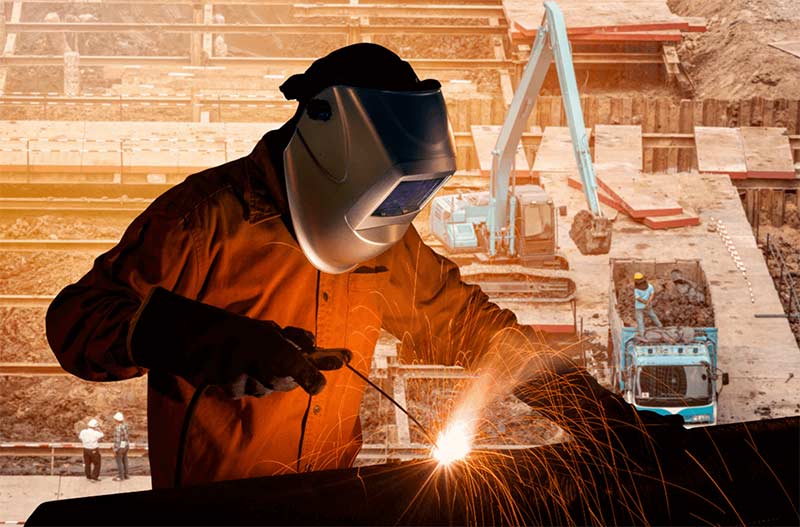
30 Second Summary
- Welding for large-scale architectural projects involves using specialized tools and techniques to join metal components for structures like bridges, skyscrapers, and stadiums.
- Key tools include MIG (Metal Inert Gas) and TIG (Tungsten Inert Gas) welders, along with advanced cutting and finishing tools. Techniques such as arc welding, gas welding, and resistance welding ensure precise, durable connections.
- These methods are selected based on material type, thickness, and the structural demands of the project. Safety measures like protective gear, ventilation, and proper training are crucial for handling the high-intensity tasks involved in large-scale welding.
Welding is a critical technique employed in various stages of large-scale architectural projects, particularly in the construction of structural components and in the creation of intricate designs for interiors. As architecture increasingly leans toward complex, innovative, and aesthetically distinctive designs, welding has become essential in shaping and securing the frameworks that support these ambitious visions. Welding is not just a functional tool for construction but also a technique that contributes to the design language of a project. When it comes to interior design, welding helps create durable, flexible, and customizable elements that define the ambiance, style, and flow of interior spaces. In this article, we explore the role of welding in large-scale architectural projects, the tools and techniques involved, and how they influence the design process.
1. The Role of Welding in Large-Scale Architectural Projects
Welding plays an integral role in the development of both exterior and interior structures. In large-scale architectural projects, welding is used to join materials like steel, aluminum, and other metals, creating structural components that are strong, durable, and stable. Welding ensures that these elements are held together securely while allowing for flexibility in design. It is particularly useful in cases where conventional methods like riveting or bolting might not be as effective.
One of the significant advantages of welding in large-scale projects is its versatility. It is applicable in creating frameworks for bridges, skyscrapers, industrial buildings, and other massive structures. It allows architects to explore innovative designs that require precise metalwork for large beams, trusses, columns, and other load-bearing components.
In interior design, welding enables designers to craft custom metal pieces such as staircases, railings, partition walls, lighting fixtures, and furniture. These metal elements can be designed to meet the specific needs of a project while offering a sophisticated aesthetic that complements the overall interior design. Welding also allows for more intricate and detailed designs, which is why it is a go-to technique for achieving complex forms in interior spaces.
2. Common Welding Techniques in Architectural Projects
Several welding techniques are used in large-scale architectural projects, each serving specific purposes and suited for different types of materials. The choice of technique depends on the project requirements, the materials being welded, and the desired finish. The most common welding techniques in architectural applications are:
2.1. Shielded Metal Arc Welding (SMAW)
Shielded Metal Arc Welding (SMAW), often referred to as stick welding, is one of the oldest and most widely used welding techniques in the construction industry. It involves using a consumable electrode coated with a flux to create the weld. SMAW is ideal for welding thick sections of metal and is often used for structural steel applications in large-scale projects. It is commonly used in exterior construction, such as welding beams and columns, but can also be employed in interior design for metal frameworks and heavy-duty elements.
Advantages:
- Versatile and portable
- Ideal for thick materials
- Works well in outdoor and indoor environments
- Low cost and simplicity
2.2. Gas Metal Arc Welding (GMAW)
Gas Metal Arc Welding (GMAW), commonly known as MIG (Metal Inert Gas) welding, uses a continuous wire feed as an electrode, combined with an inert gas shield to protect the weld area. GMAW is known for its speed and ease of use, making it popular for architectural and interior design applications. It is particularly useful when welding thin to medium-thickness metals, such as aluminum and stainless steel, which are commonly used in interior design for decorative elements like handrails, staircases, and light fixtures.
Advantages:
- Faster than SMAW
- Cleaner welds with minimal spatter
- Ideal for thin materials
- Easy to learn and use
2.3. Tungsten Inert Gas Welding (TIG)
Tungsten Inert Gas (TIG) welding, also known as Gas Tungsten Arc Welding (GTAW), is one of the most precise welding techniques. TIG welding uses a non-consumable tungsten electrode to create the weld, with an inert gas, usually argon, providing the shielding. TIG welding is used for delicate, high-precision welding tasks and is ideal for thin materials like stainless steel, brass, and aluminum. It produces clean, high-quality welds and is commonly used for architectural interior elements such as custom metal furniture, light fixtures, and decorative panels.
Advantages:
- Precise, clean welds with excellent finish
- Ideal for thin and delicate materials
- No spatter or slag
- High-quality welds in visible areas
3. Tools Used in Welding for Architectural Projects
The tools used in welding for large-scale architectural projects are crucial in determining the quality, precision, and effectiveness of the weld. Various tools are employed for welding, depending on the technique used and the specific demands of the project. Some of the most common welding tools include:
3.1. Welding Machines
Welding machines are at the core of any welding operation. The type of welding machine selected depends on the welding technique. For instance:
- Stick welding requires a manual welding machine that uses electrodes for SMAW.
- MIG welding machines are used for GMAW, typically equipped with a wire feed system.
- TIG welding machines require a high-frequency generator and precise controls to regulate the welding current and gas flow.
3.2. Protective Gear
Welding involves high heat, bright light, and potentially harmful fumes, which is why protective gear is essential. This includes:
- Welding helmets with auto-darkening filters to protect the eyes from intense UV and infrared light.
- Fire-resistant gloves to protect the hands from heat and sparks.
- Protective clothing like welding jackets and aprons made from durable, flame-resistant materials.
- Respirators to protect the welder from harmful fumes and gases produced during welding.
3.3. Welding Electrode Holders and Torches
The electrode holder is used to secure the welding electrode, and the torch is essential for directing the heat and creating the weld. In MIG welding, the torch holds the wire feed, while in TIG welding, the torch holds the tungsten electrode.
3.4. Wire Feeders
In MIG and FCAW welding, a wire feeder system is used to deliver the welding wire to the joint. The feeder is an essential part of the process, as it ensures a continuous supply of wire to maintain the welding arc.
3.5. Grinding and Finishing Tools
After welding, the metal work often needs to be ground or polished to remove excess material or rough edges. Grinders, sanders, and polishing tools help achieve the desired finish. These tools are especially important in interior design projects, where the aesthetic quality of the weld is crucial for achieving smooth and visually pleasing surfaces.
4. Welding in Interior Design
While welding is primarily associated with the construction of large structures and frameworks, its role in interior design is equally significant. In interior design, welding is used to create custom-made elements that add character and functionality to a space. These can include:
4.1. Metal Furniture
Welding is essential for creating durable, customized metal furniture. Welded pieces allow designers to combine different metals or create unique shapes and designs for tables, chairs, shelves, and other furniture. The strength and stability provided by welded joints make metal furniture ideal for both residential and commercial interiors.
4.2. Staircases and Railings
Welding plays a critical role in crafting metal staircases and railings, particularly those that feature intricate, artistic designs. Custom metal staircases are often welded to ensure strength and stability, while also allowing for personalized design elements such as decorative balusters, handrails, and treads.
4.3. Decorative Panels and Screens
Welded metal panels and screens can be used to divide spaces, create focal points, or add a sense of luxury to an interior. Metalwork can be welded into geometric patterns, organic designs, or even intricate art pieces. These custom metal elements elevate the design of any space and can add both style and privacy.
4.4. Lighting Fixtures
Custom metal lighting fixtures, such as chandeliers, pendant lights, and sconces, are often welded to achieve a unique, high-end look. The flexibility of welding allows designers to create sculptural, modern, or even industrial-style lighting that fits the aesthetic of the space.
5. Challenges and Considerations in Welding for Architectural Projects
While welding offers numerous advantages, it also comes with specific challenges
5.1. Material Selection
The choice of materials significantly affects the welding process. Different metals have varying melting points, conductivity, and characteristics. Selecting the right materials is essential to ensure that the welding process will be successful and that the final product meets both functional and aesthetic requirements.
5.2. Precision and Quality
In architectural applications, precision is crucial. Poorly executed welds can compromise the integrity of a structure or ruin the aesthetic of a design. Ensuring high-quality welds requires skilled labor, specialized equipment, and a deep understanding of the materials being worked with.
5.3. Safety
Welding presents inherent safety risks due to the intense heat, bright light, and potential for sparks and fumes. Proper training and adherence to safety protocols are essential to prevent accidents and ensure the safety of workers.
Conclusion
Welding is a vital technique in the construction and design of large-scale architectural projects, both for the structural integrity of buildings and for the creation of custom interior elements. The range of tools and techniques available, such as SMAW, MIG, TIG, and FCAW welding, allows architects and designers to realize ambitious visions with precision and creativity. In interior design, welding offers a means of creating durable and unique metal furnishings, railings, lighting fixtures, and other features that contribute to a space’s aesthetic appeal and functionality. As architectural projects continue to push the boundaries of design, welding will remain an essential part of turning visionary concepts into reality.